When the Question Itself Was the Problem
Most philosophical debates don't need better answers. They need a different starting point. This dialogue explores Geneosophy, a framework in which centuries-old paradoxes about mind and body, mathematics and reality, don't get solved. They stop arising.
[Part 1] | [Part 2] | [Part 3] | [Part 4] | [Part 5] | [Part 6]
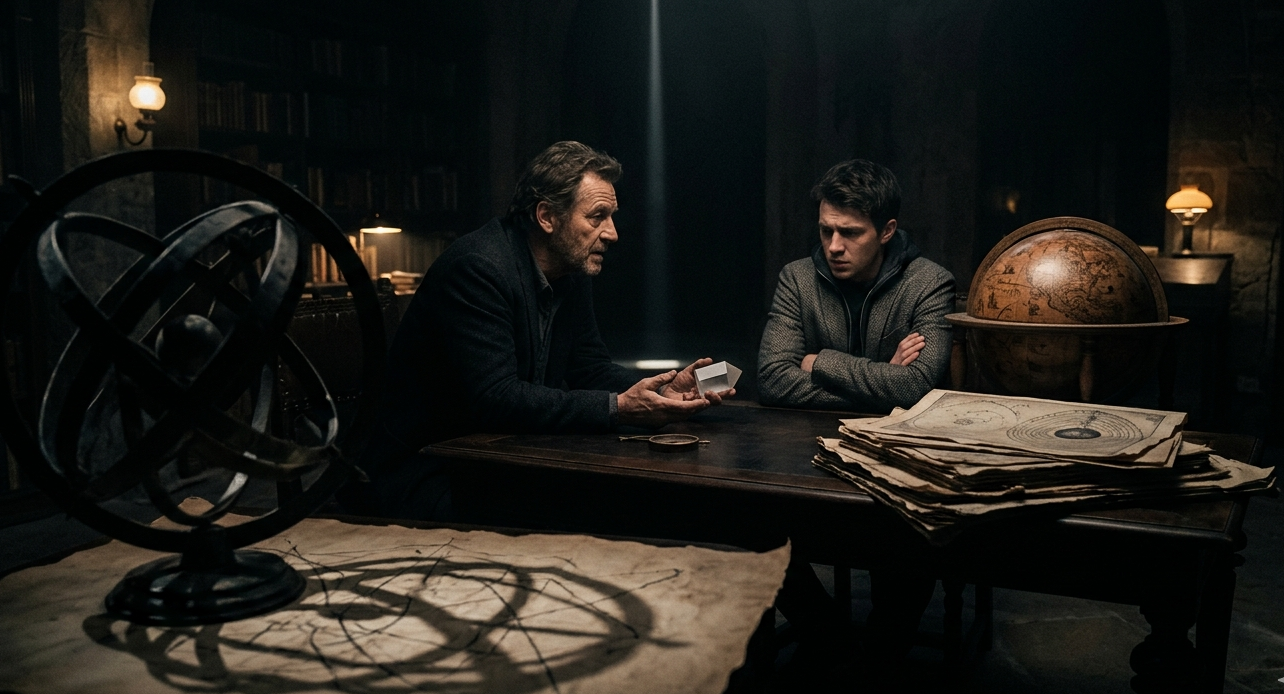
Practitioner: I want to push on something. You keep saying Geneosophy dissolves paradoxes rather than solving them.
Philosopher: See, Geneosophy does not explain most of the mysteries and paradoxes that we currently face. Those just dissolve, in the sense that if you are within the Geneosophic conceptual framework, those mysteries and paradoxes just do not arise.
Practitioner: That sounds like a rhetorical move. A way of avoiding the hard work of actually answering the questions.
Philosopher: It would be, if the paradoxes were genuine puzzles about an independently existing reality. But they're not. They're structural consequences of a specific starting point. Change the starting point, and they don't get answered. They stop arising.
Practitioner: But that's exactly what worries me. You can make any problem disappear if you simply redefine the terms around it. That's not insight. That's erasure.
Philosopher: The difference is whether the new framework is more or less useful. Erasure ignores the paradox. Dissolution shows that the paradox was never what we thought it was. The question looked deep because of how it was framed, not because of what it was pointing at. Galileo didn't demonstrate mathematically that mathematics was the right language before choosing it. He chose it because it made things possible that weren't possible before. Geneosophy earns its claim the same way.
Practitioner: That still requires you to demonstrate that the current framing was the problem. You can't just assert it. Because from where I'm standing, the paradoxes are not artifacts of bad grammar. They're places where reality resists us.
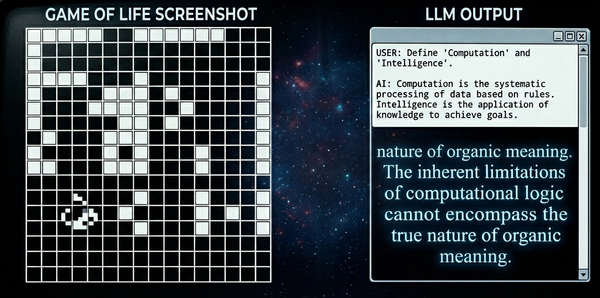
Philosopher: The current framing is not wrong, it works beautifully, but hits a conceptual wall when trying to comprehend the concepts of intelligence and living organisms. You can choose to stay there in the current paradigm. The resistance you feel is real. But ask yourself, is it reality pushing back, or is it the framework straining under its own weight?
Practitioner: I'm not sure that distinction is as clean as you need it to be. Give me an example of dissolution.
Philosopher: The unreasonable effectiveness of mathematics. Wigner's puzzle. Why does abstract mathematics, developed with no empirical intention, describe physical reality with such uncanny precision? This has troubled physicists and philosophers for decades. It feels like a miracle that demands explanation.
Practitioner: And?
Philosopher: The miracle only exists if mathematics and physical reality are assumed to be independent domains that somehow correspond. But in Geneosophy, both are generated within the XI assumption. Mathematical structures and physical phenomena are expressions of the same generative ground. The correspondence isn't miraculous. It's expected. You're not asking why two separate things match. You're noticing that two expressions of the same source rhyme.
Practitioner: That's elegant. But it could be seen as explaining everything by explaining nothing. "XI generates it all", how is that different from saying "God made it that way"?
Philosopher: It's a fair challenge. The difference is that XI is not an entity separate from the world that acts upon it. It is not a creator standing outside creation. XI is the generative ground immanent in every act of knowing, every act of perceiving, every act of constituting a world. It is what you are an expression of when you ask the question. God, in the traditional sense, is postulated to explain a world from outside it. XI is what you find when you follow the inquiry into the conditions of the inquiry itself.
Practitioner: Mind and body. That's the one that has resisted everything.
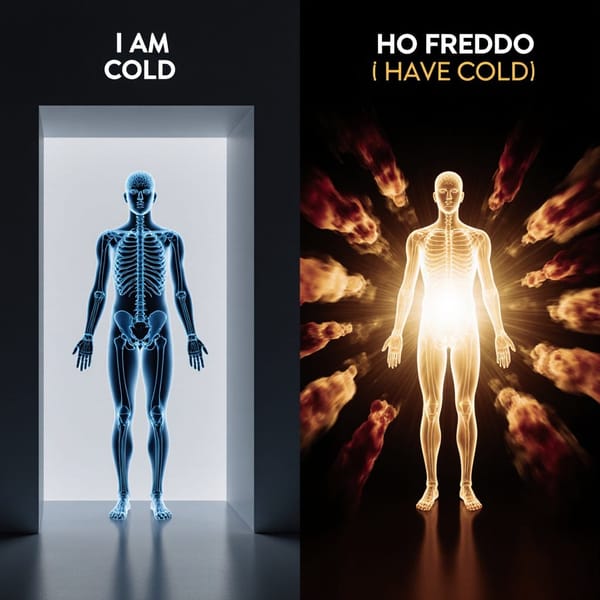
Philosopher: Because every proposed solution accepts Descartes' terms. Two substances, two domains, how do they interact? Every answer generates new problems. Geneosophy doesn't accept the terms. Mind and body are not two substances. They are two modes in which XI's generative activity appears. Felt from different angles of the same source. The interaction problem dissolves because they were never separate to begin with.
Practitioner: And matter itself? You're not saying matter is just an illusion? Just mind?
Philosopher: No. That would be idealism, and idealism makes the same mistake as materialism, it just reverses the priority. Matter is not reduced to mind. Matter is a specific mode of appearing. It is what concepts feel like when they are felt as located in space, extended through time, measurable in quantity. Space, time, quantity, these are not features of an independently existing external world waiting to be discovered. They are the specific texture of a class of XI-generated concepts that we call objects.
Practitioner: So physics is describing …
Philosopher: A scope felt "generated" by XI. Precisely and productively. Physics is not wrong. It simply cannot, by design, account for the ground that generates the domain it describes. That is not a failure. It is its boundary condition. Now made explicit.
Practitioner: (long pause) If this holds, if these paradoxes genuinely dissolve rather than just getting renamed, then the history of philosophy looks very different. Centuries of argument about mind and body, about idealism and materialism, about why mathematics works, all of it was shadow-boxing.
Philosopher: Not only discussing about which part of the map is the territory, without asking what produces the capacity to map at all, but more profoundly, without asking under what conditions of possibility the territory itself is manifested.
Practitioner: And the dissolution isn't a trick. It's a genuine shift in register.
Philosopher: The problems were real, within their framework. The questions were serious. The philosophers who wrestled with them were not confused people. They were precise thinkers working at the boundary of what their starting assumptions made visible. Geneosophy doesn't dismiss them. It steps back one level further, two, to be more precise. To the scope where the assumptions themselves become visible. And from there, the problems don't disappear through clever argument. They simply, do not arise.